
Animated Film Pitch
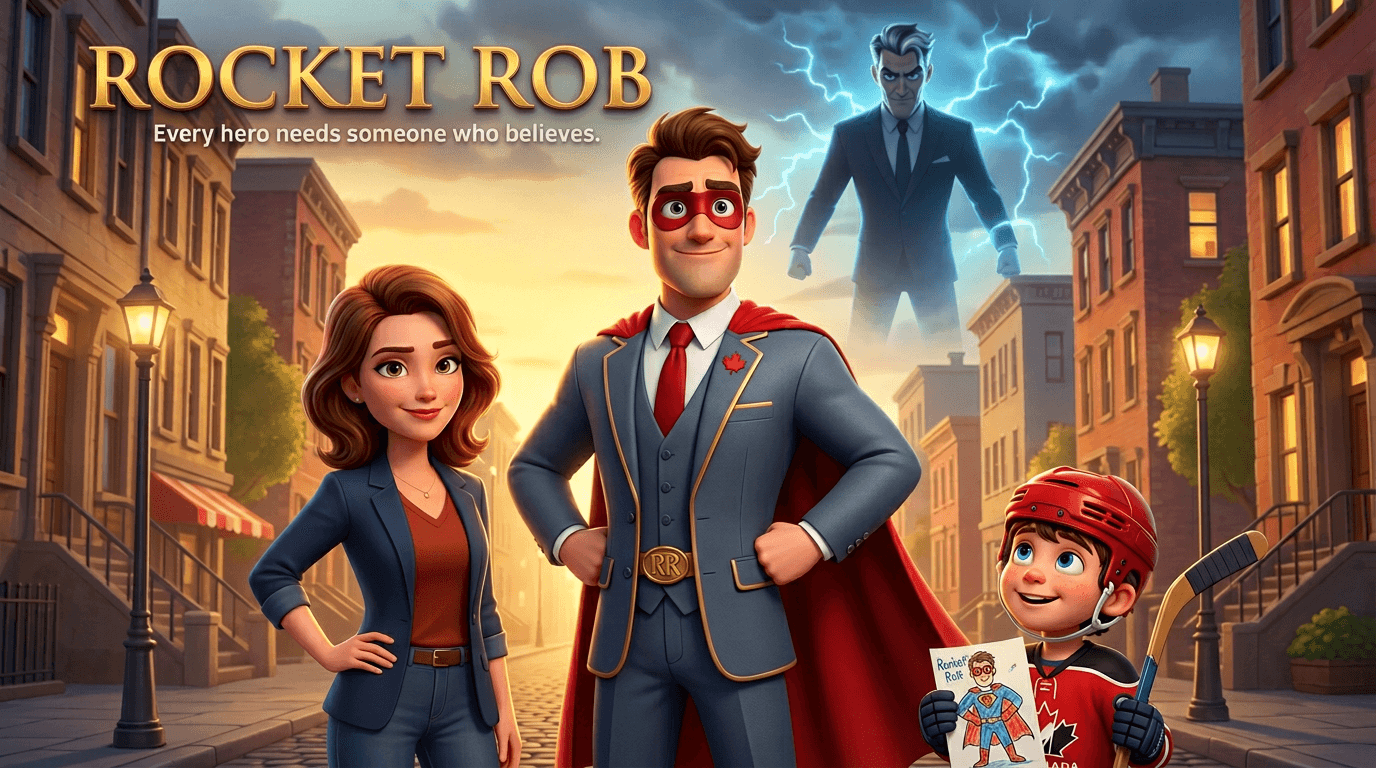
Rocket Rob
A dad who might be a superhero — or might just be trying his best.
Animated Feature · Kids 6–12 + Parents · Funny, Then It Gets You · ~94 Minutes
Theme
“Being a hero isn’t about saving the world. It’s about showing up for the people who believe in you.”
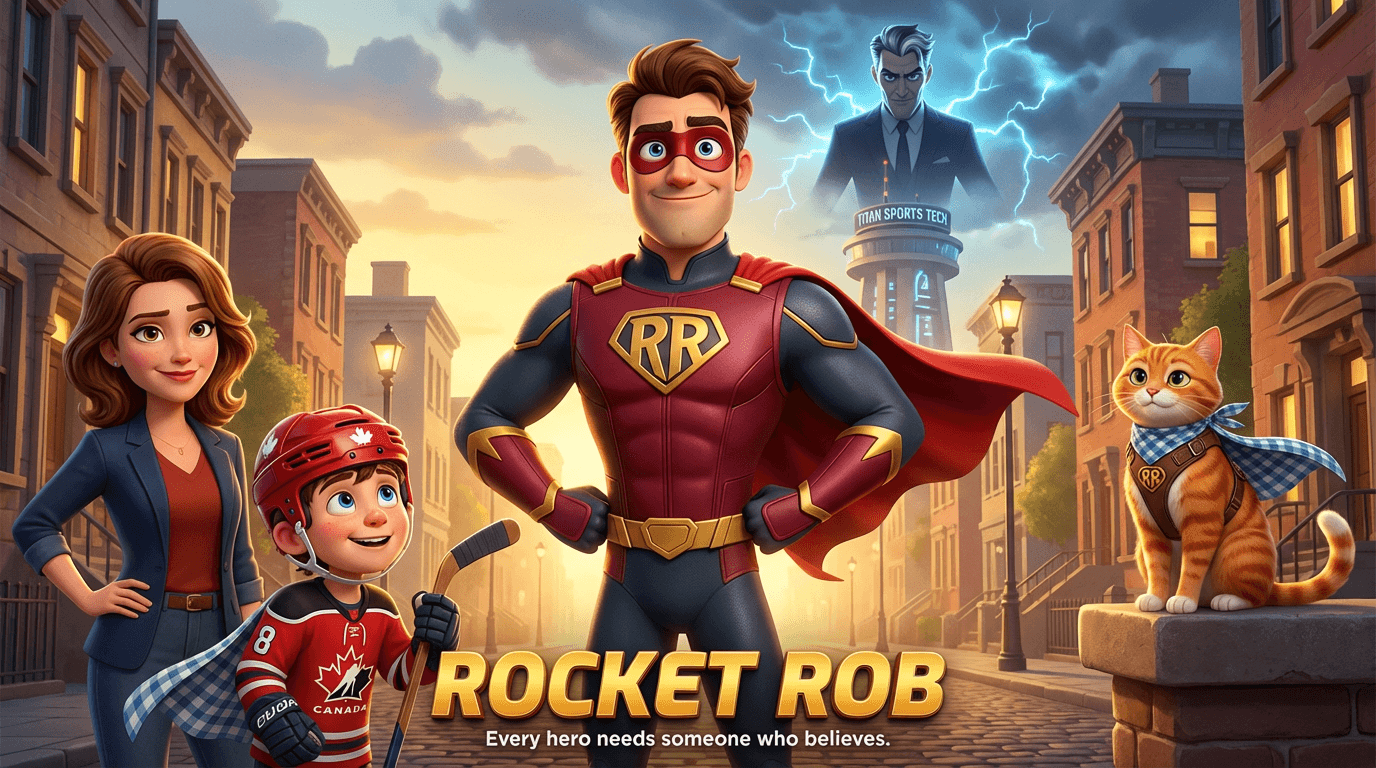
Rob has no superpowers. The superhero layer is Max’s imagination — a visual language the film commits to fully without winking. Max’s belief gave Rob the courage to try. When that belief goes silent mid-film, Rob doesn’t lose powers. He loses himself.
When Max’s voice returns at the end — not as faith, but as a choice — he’s not powering his dad. He’s honoring both parents.
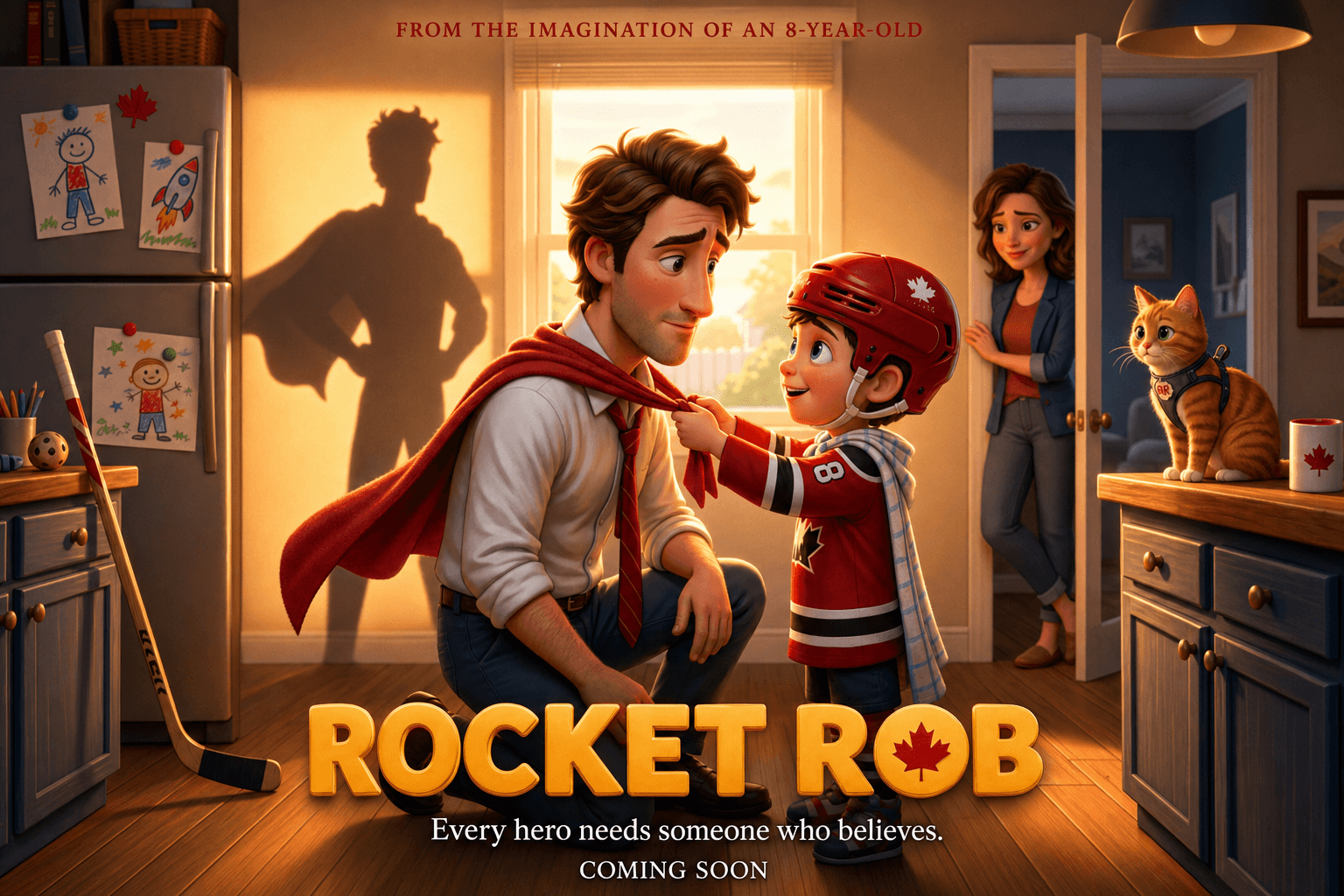
Two audiences. Same film.
When Max narrates his dad’s battle with a villain, kids see an epic fight. Parents see a man struggling to say no to his boss. Neither reading is wrong. Both are the film.
This isn’t subtext hidden for adults to find. It’s two fully committed stories occupying the same frames.
Kids see:
A superhero dad who flies across the city, battles a giant made of kitchen plumbing, and saves everyone before bedtime.
Parents see:
A man choosing between a promotion and his family. A mother who gave up her identity to hold the house together. An empty seat at a hockey game.
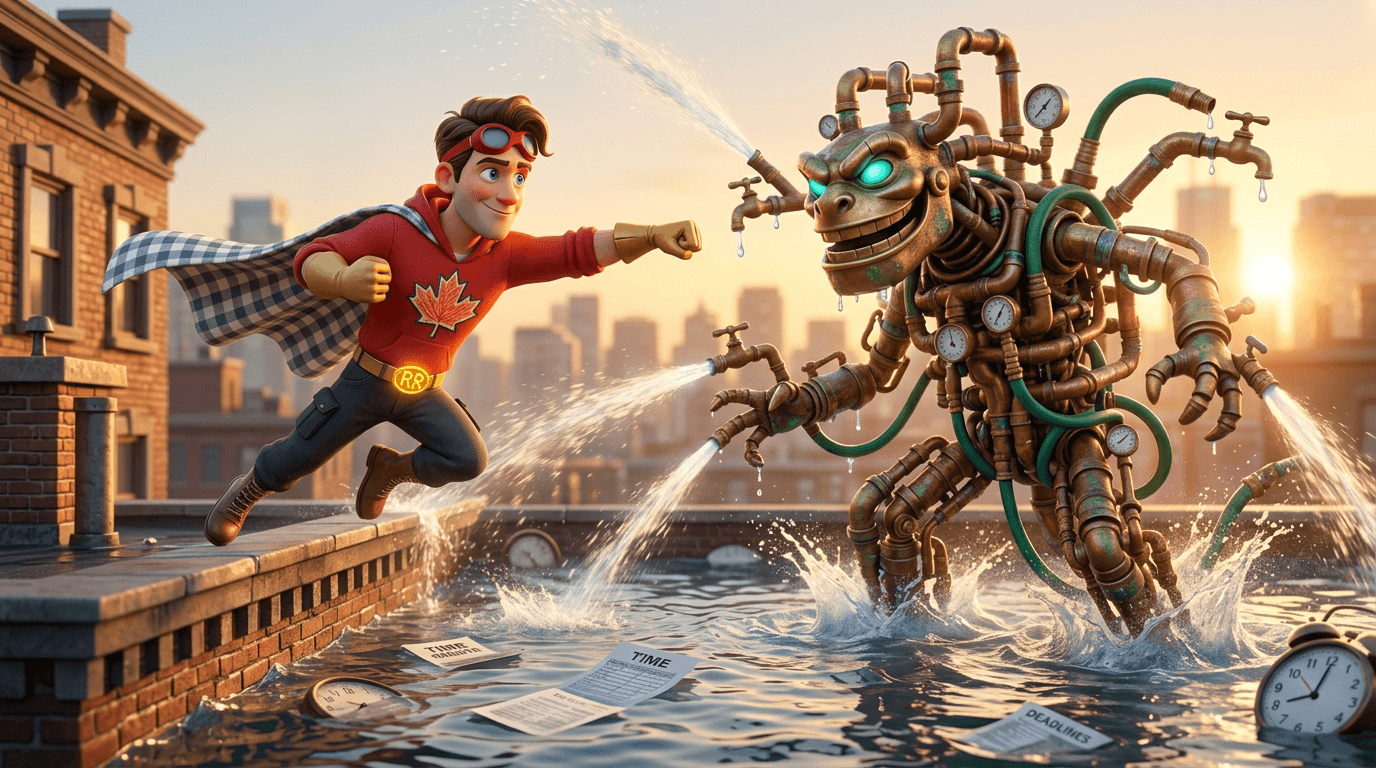
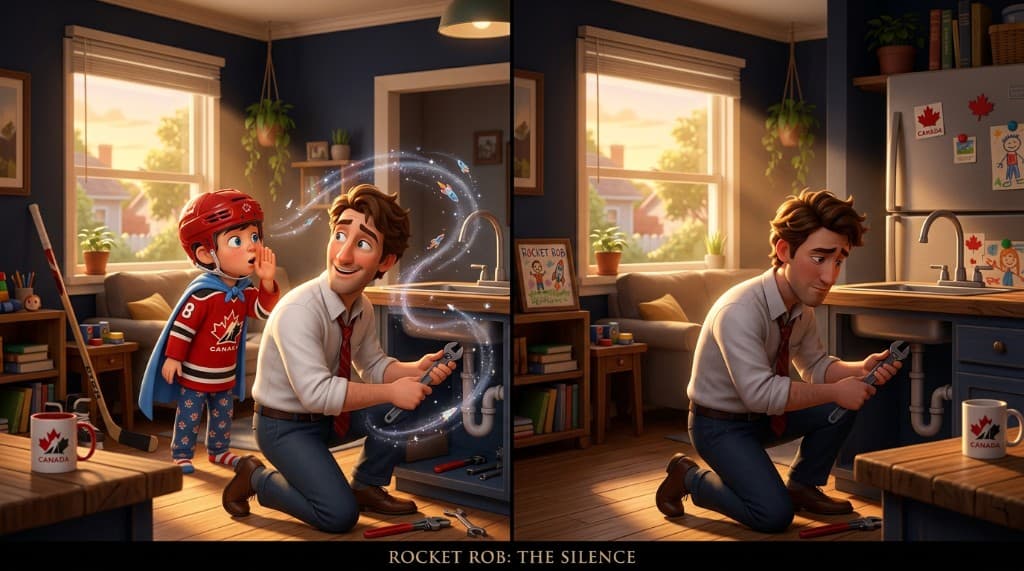
The belief arc.
Act 1: Max Believes
Full color, full spectacle. Rob flies. Villains are towering. The mundane becomes extraordinary. Hydro Rex — fifty feet of kitchen plumbing — battles Rob across the skyline. The audience is all in.
Act 2: The Silence
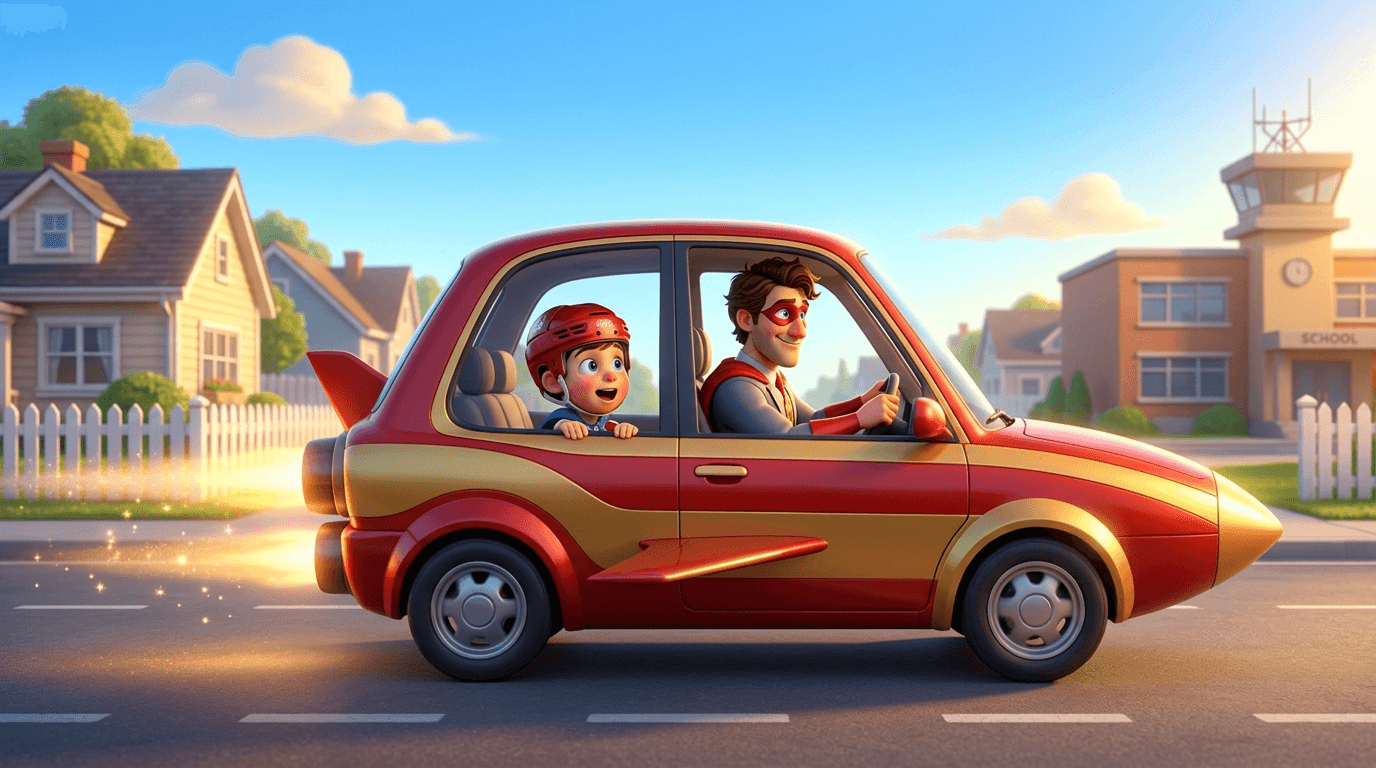
Max stops believing. The imagination track dies. Same cameras, stripped of magic. The sink is just a sink. The car is just a car. The audience loses something they didn’t know they had. The Silence lasts ~30 minutes of screen time.
Act 3: Self-Belief
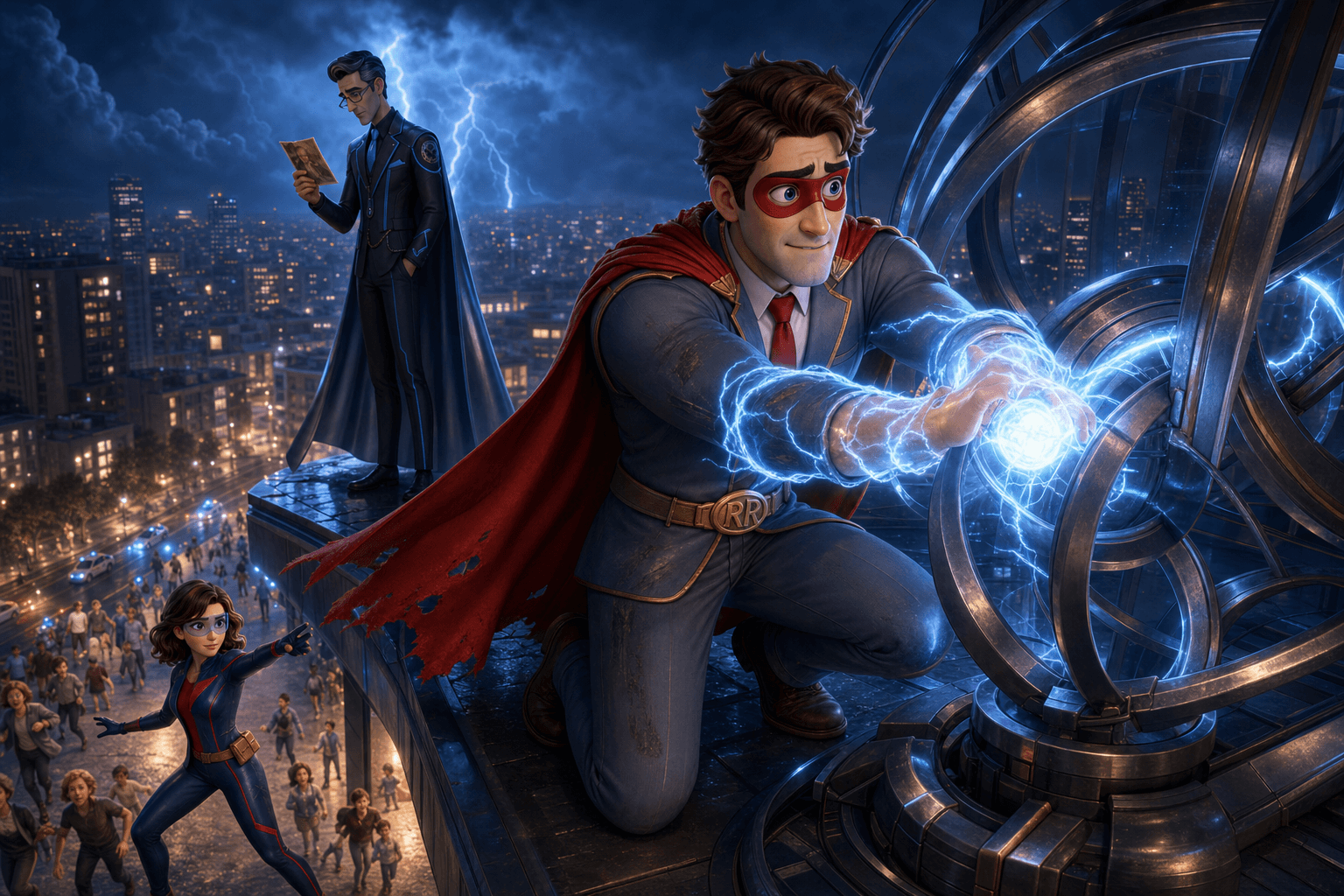
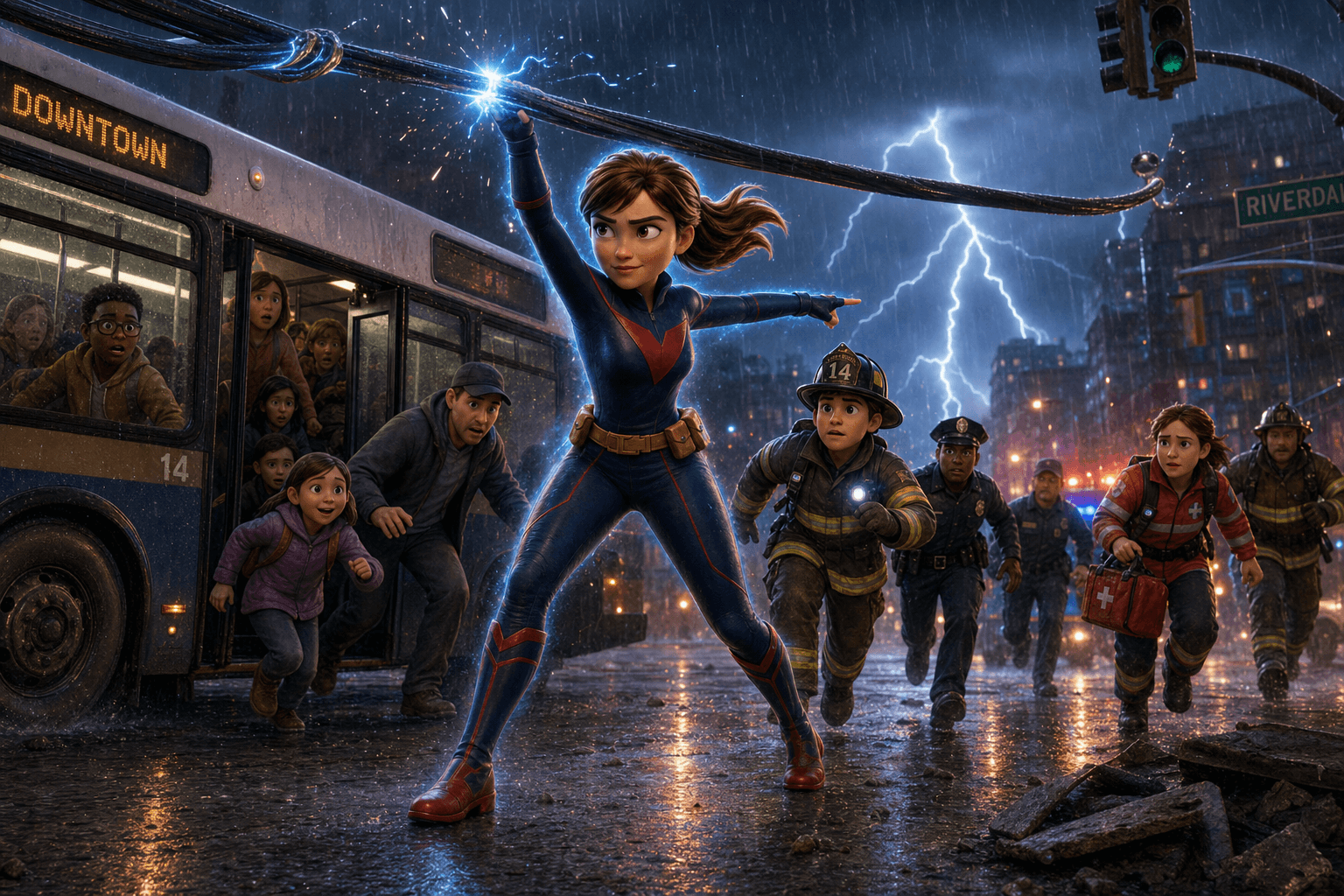
Rob finds his own courage — not borrowed from Max, earned by choosing family over everything else. He tries to summon the old hero-narration alone in a parking garage and nothing happens; he says it again with Claire watching and the world lights up. The story he needed Max to tell, he learns to tell himself. Claire reveals herself as Vela. Together they take on the storm. The spectacle returns — but the source is different. Act 1 was powered by a child’s faith. Act 3 is powered by two parents’ courage.
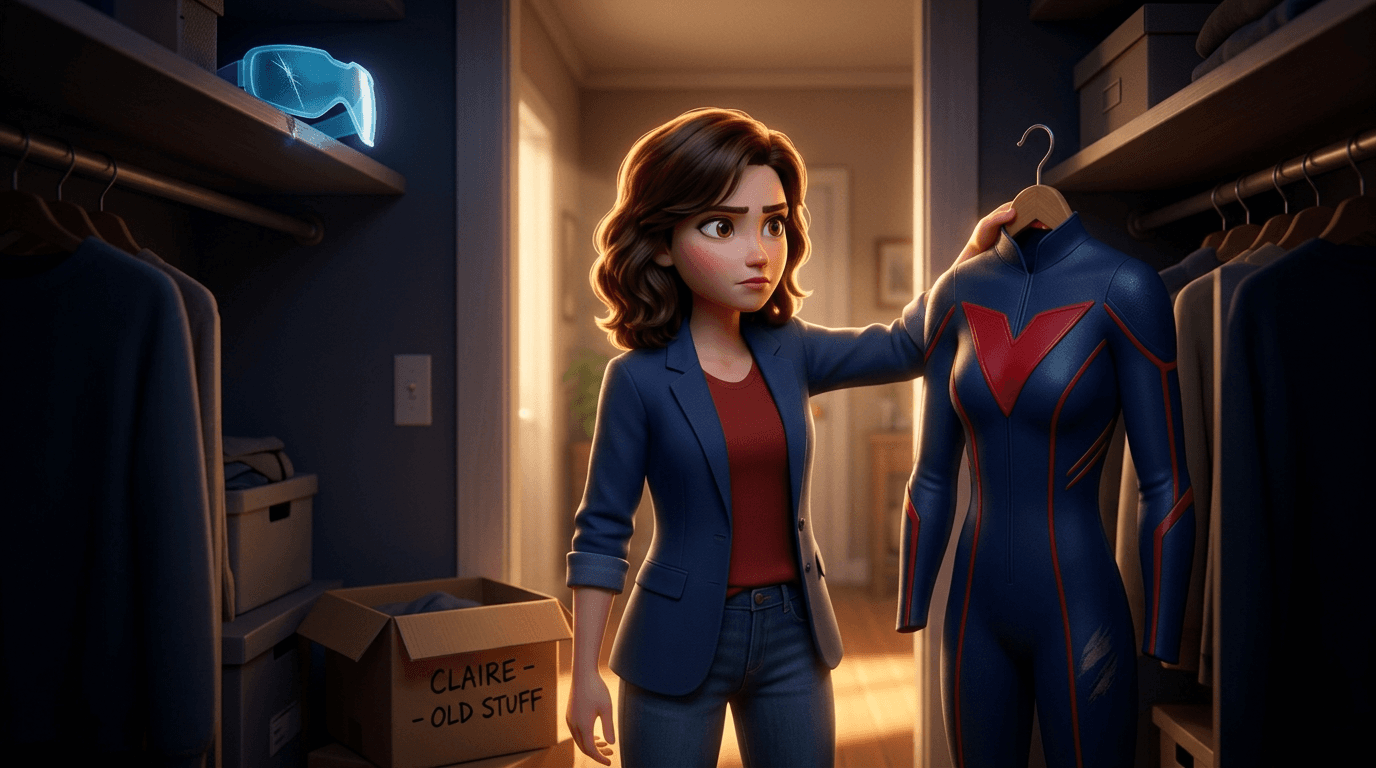
Claire isn’t a supporting character.
She ran the household invisibly and thanklessly. Her moment in Act 3 isn’t the family needing her — it’s Claire deciding, on her own terms, to be seen again.
“I was Vela before you were Rocket Rob.”
On the rooftop, Rob defers to her tactical read without hesitation. “Call it.” No debate. No ego. She strips the machine’s defenses in three moves Rob couldn’t have identified alone. Then: “What time is it?” Two people, bruised over a city they just saved, and the first thing on both their minds is a kids’ hockey game.
The villain dissolves.
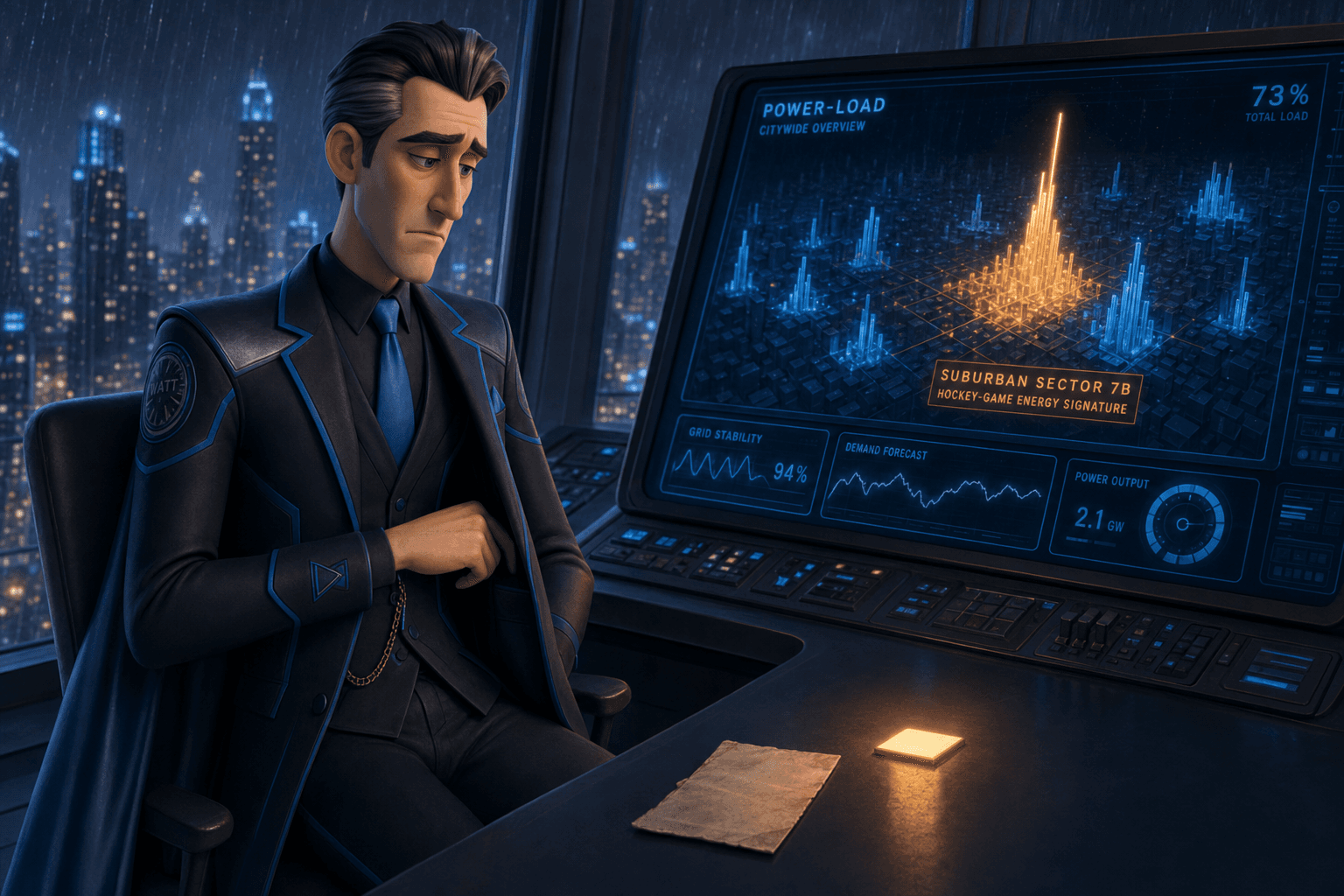
Victor Watt doesn’t get punched into a building. He becomes irrelevant. His goal isn’t destruction — it’s recruitment. If Rob joins him, Rob’s life stops being a rebuke to the choice Watt made.
“You could have been great. Instead you chose bedtime stories and hockey games.”
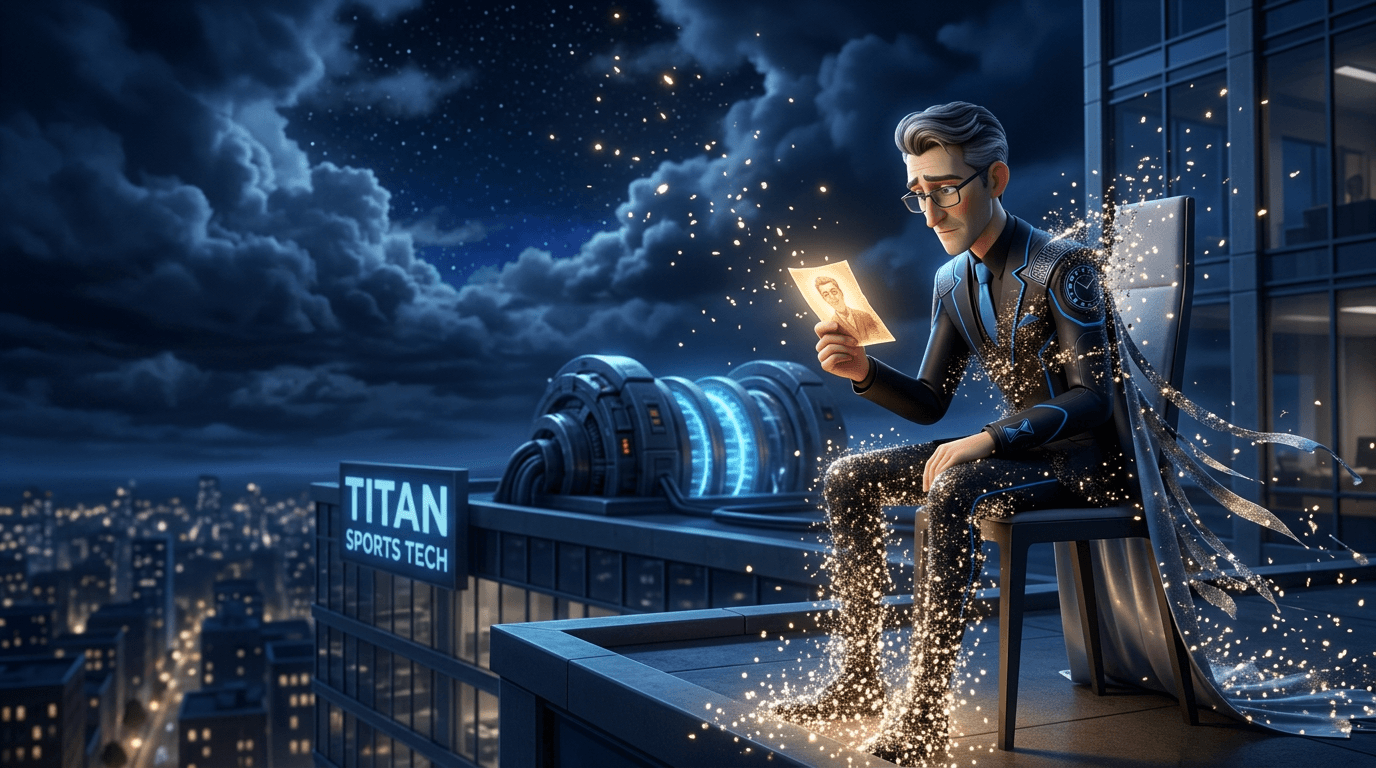
When Rob chooses differently, Victor’s worldview loses its power. He dissolves into golden light — and the light falls, settling over the blacked-out city until it glows back to life, block by block. The power he spent a lifetime hoarding, given back the instant he lets go of it. A kid can name exactly what happened: he turned into the lights.
The one thing that doesn’t dissolve is the photograph. It drifts down, lands face-down at Rob’s feet, and Rob picks it up. We never see what’s in it — but Rob’s face tells us it was a kid. He pockets it and carries it home.
The scenes that sell it.
The Opening Smash Cut
An epic superhero battle runs 90 seconds past the point where a conventional film would cut away. Then: SILENCE. Kitchen. Leaky sink. Dad on his back. The audience realizes the whole fight was a faucet.
The Empty Seat
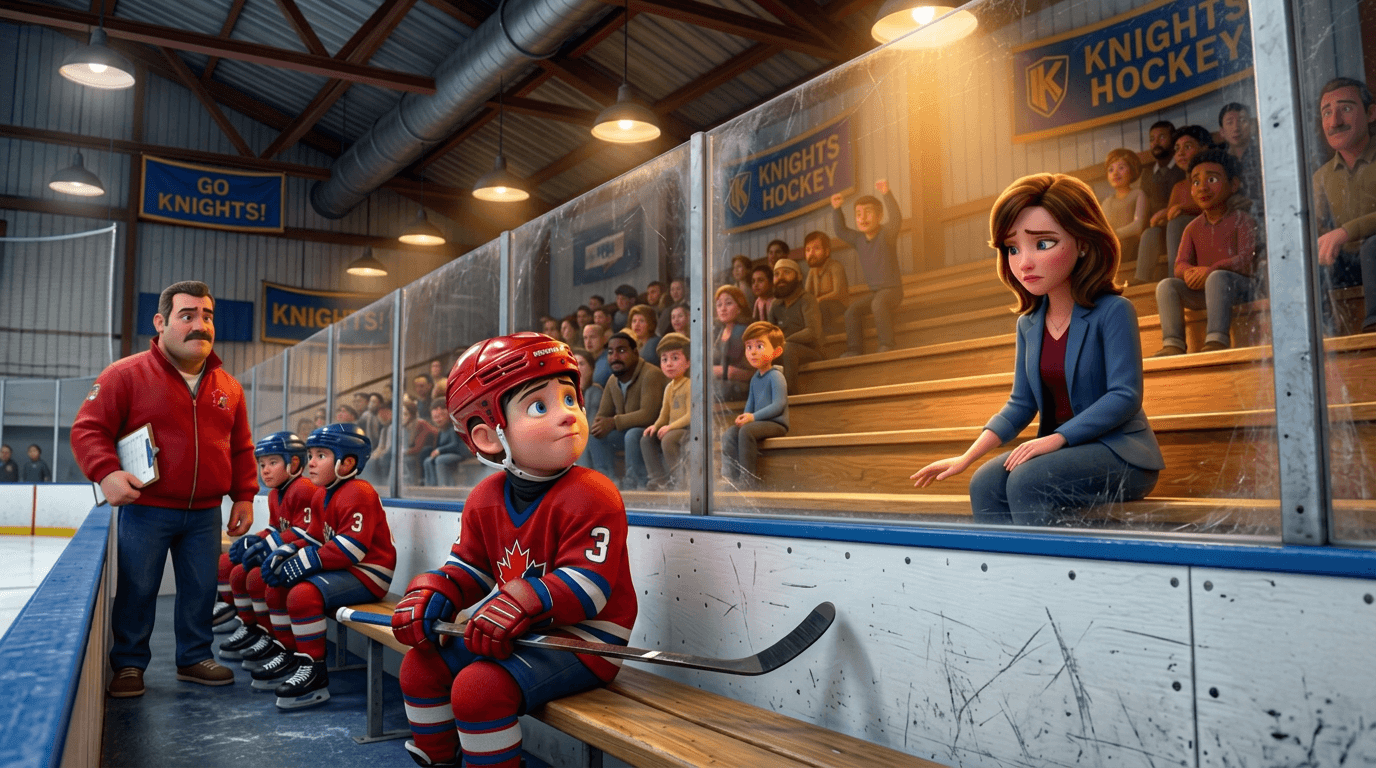
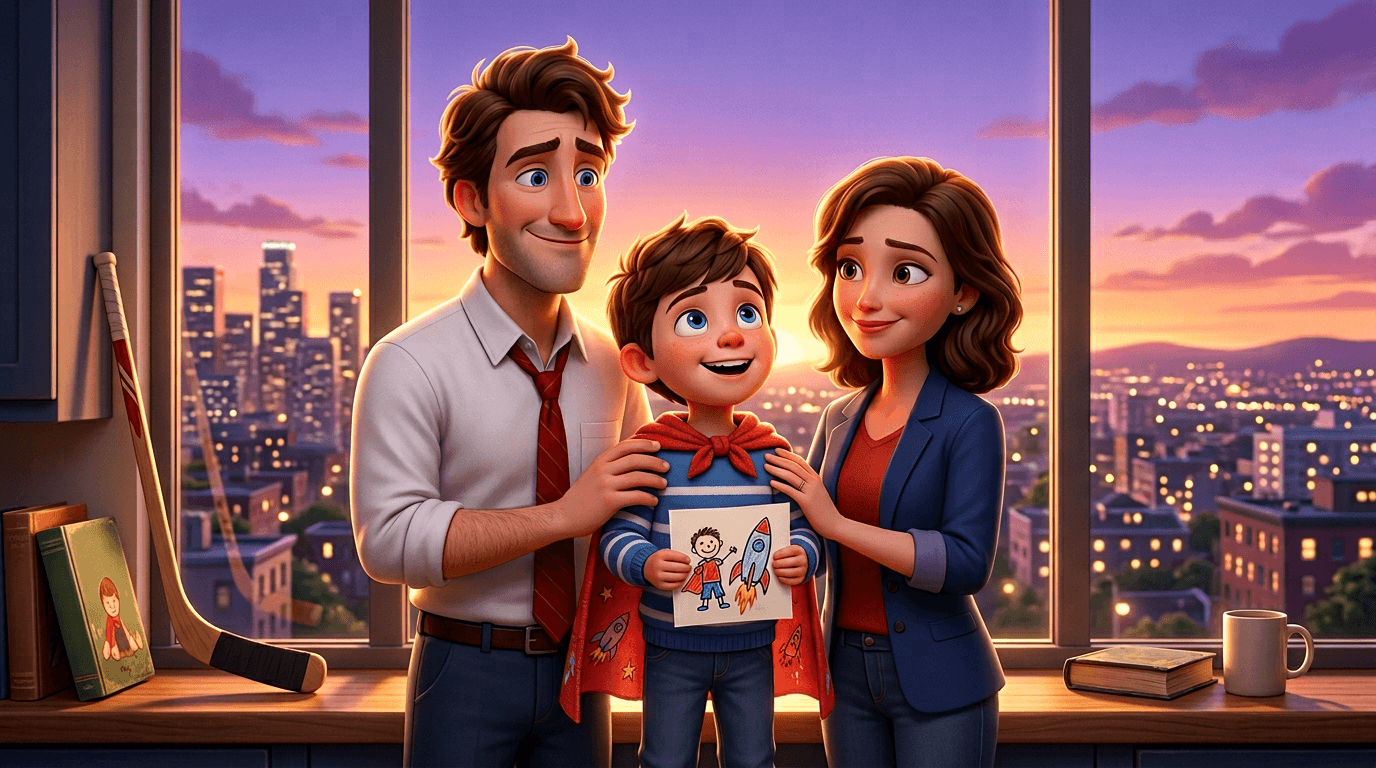
Max on the bench. Other dads cheering. Claire’s hand resting on the empty chair beside her. Max, softly: “It’s okay… my dad saves bigger things.” This is the film’s Ellie moment.
The Corner Office
Rob goes to Watt’s tower to say no in person — and almost doesn’t. The overlay turns on warm and gold for the offer: the future he could build, and his own reflection in the glass, pressed and calm and free of him. He keeps the card. The temptation is real, and we watch him want it.
The Vela Reveal
Claire reroutes the house wiring during the blackout with hands that shouldn’t know how. “I was Vela before you were Rocket Rob.” The audience rewatches the entire film in their head.
The Handoff of the Voice
Alone in a garage, Rob tries to say the hero into being the way Max used to. Nothing answers. Then, suiting up beside Claire, he tries once more — “I’ve got you. Say it.” — and the world finally lights up around him. Belief needs a witness. He just found his.
The Belt Buckle Drawing
Mid-battle, Rob finds Max’s drawing tucked behind his buckle — “My Dad Saves The World.” He’s been carrying the reason to come home the entire time and never knew.
The Title Card — Logo to Crayon
The film opens on the polished ROCKET ROBlogo. It closes on the same two words in Max’s crayon — every color in the box, a rocket of his own. Same name. Different hand. The spectacle becomes the truth.
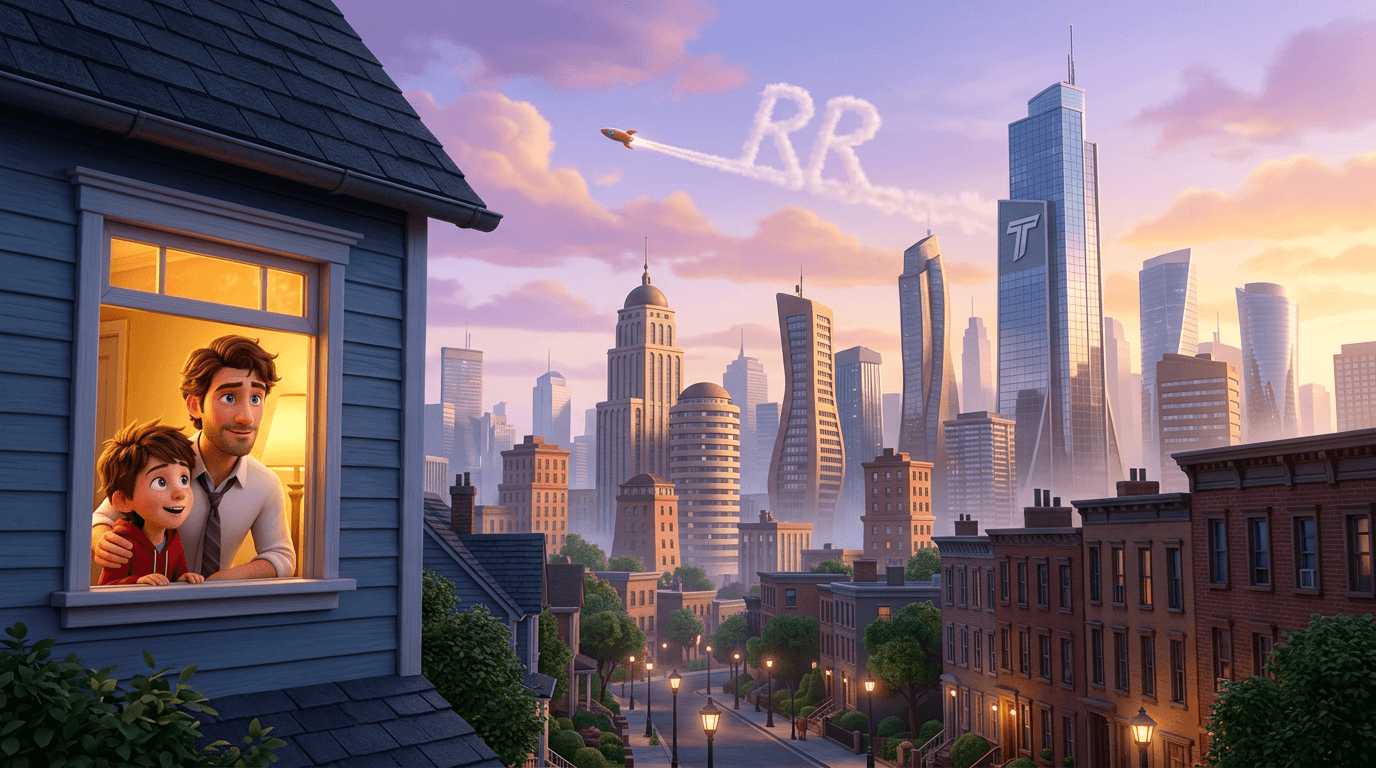

The spectacle becomes the truth.
Why now.
Family animation has a trust problem. Studios wrap every emotional beat in IP, franchise scaffolding, or a wink that tells the audience it’s okay not to feel too much. The films that break through — Inside Out, Coco, the last act of Toy Story 3 — are the ones that trust kids with real complexity and let parents sit in it. Rocket Robdoesn’t need a cinematic universe or a toy line. It needs a dad, a dish towel, and thirty minutes of silence.
The emotional architecture of Inside Out.
The family under pressure of The Incredibles.
The visual imagination of Walter Mitty.
The quiet devastation of Toy Story 3.
Twenty scripted scenes. A full production bible. 90+ pieces of art. Complete character design sheets with turnarounds. A standalone animated short script — festival-ready, spoiler-free. Everything a studio needs to say yes.
Read the proof.
Maple: Field Reportis a standalone animated short — festival-ready, spoiler-free, and free to read right now. It’s ten minutes in this world: the voice, the comedy, the pivot that earns the quiet moment. If the pitch tells you what the film is, the short shows you how it feels.
Read the short →The package.
A complete master screenplay, a full production bible, a festival-ready short script, and 90+ pieces of art. Glance at the one-sheet — the full package is a request away.